Define a beginning and an end
“Organize the house” can become a task without limits. “Clear the desk for work” has a concrete result. Before you start, choose the space and think about how it needs to work afterward.
Set aside an amount of time that fits your routine. If time is limited, avoid emptying several cupboards at once. Finish one part before opening another.
Group items that are out of place
Sort objects into simple groups: staying here, belonging elsewhere, needing a decision, or ready to leave. Use a temporary box for items going to other rooms so you do not interrupt the task for every object.
Documents, keepsakes and shared items may need more attention. When in doubt, set them aside to review later rather than discarding them in a hurry.
Organize around use
Keep frequently used items within easy reach. Things used rarely can occupy less convenient parts of the space. Group items used for the same task, such as a notebook and pens or packing materials.
Before buying boxes or dividers, try the new arrangement with what you already have. This helps you find out whether you really need an organizer and what size makes sense.
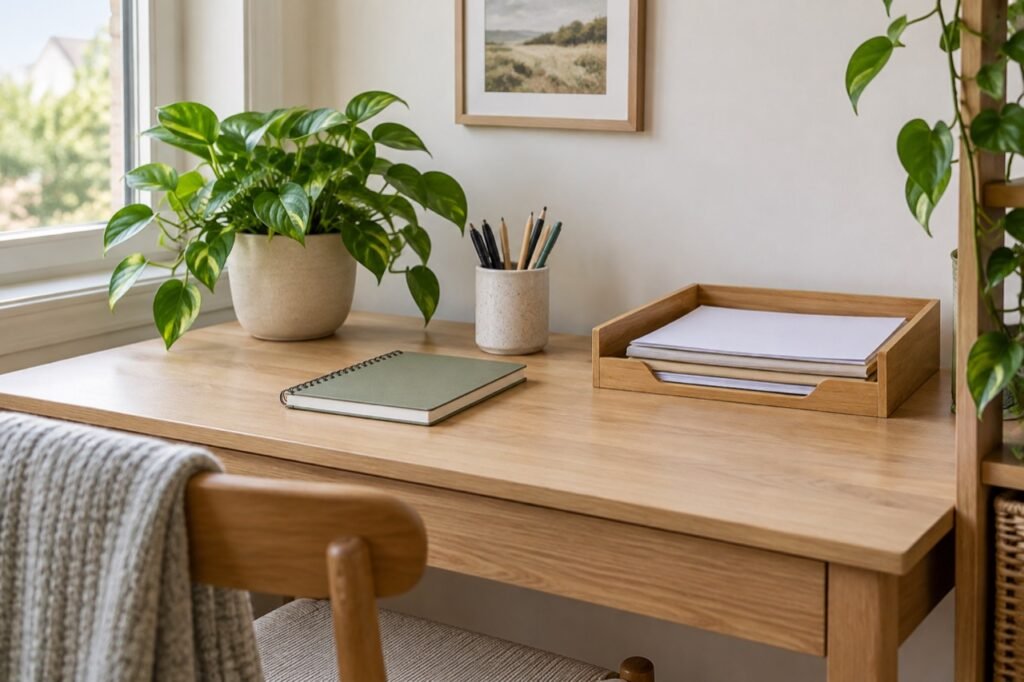
An example: the work desk
- Gather loose papers in one place to review.
- Remove objects that are not used in that space.
- Keep only what you need for the current task close at hand.
- Choose a fixed place to store each group of items.
The aim is not to keep the desk empty at any cost. It is to find what you need and use the space easily.
Do a little maintenance
After the initial organization, notice what starts to pile up again. Perhaps there is no simple place for incoming mail, or an object is stored too far from where it is used.
Adjust the arrangement to your real routine rather than seeking a perfect appearance. A quick reset after an activity may be more practical than waiting until the space fills up again.
To break this process into smaller steps, read the guide to to-do lists and planning your day.
A practical sequence for one drawer
Choose a drawer you can finish in the time available. If useful, take a photo for your own comparison. Set aside a nearby surface for the contents; avoid emptying everything onto a place you will need to use immediately.
- Take out one group of items and check what actually belongs there.
- Separate anything to return to someone or move to another room.
- Clean according to the surface material and let it dry before replacing items.
- Put things back by use, keeping frequently needed items accessible.
- Check that the drawer closes without trapping cables, papers or fragile objects.
If there is not enough time to review everything, finish one compartment and leave the rest for another session. An interrupted sorting task should not block walkways or make the space harder to use.
When clutter returns to the same spot
Situation: mail piles up on the desk again a few days after you clear it. Before buying more boxes, identify the pending decision: documents to keep, bills to review and papers with no further use.
An incoming area with three simple divisions may work better than one pile. Decide when to review it as well; a box gathers pending items but does not resolve them by itself.
Agree on shared-space rules
Before moving someone else’s belongings, agree which areas are shared and where items should go. Short labels can help, provided they use names familiar to everyone who uses the space. Keep documents and personal items away from unnecessary exposure.
Do not discard papers simply because they look old. Check their purpose and any retention obligations with the responsible person. Follow the specific storage and access instructions for cleaning products, medicines or sharp objects; this space-organizing routine does not replace them.
Questions about keeping things organized
Should I buy organizers first?
No. Try grouping items with what you already have. Then measure the available space and decide whether a box would solve a real problem.
How can I tell whether it worked?
Notice whether finding and returning items takes less searching. A good-looking drawer that makes daily use difficult still needs adjustment.
Make maintenance a short action on your to-do list.